
Invisalign IPR Explained: How to Fix Crowding Without Expanding Your Smile
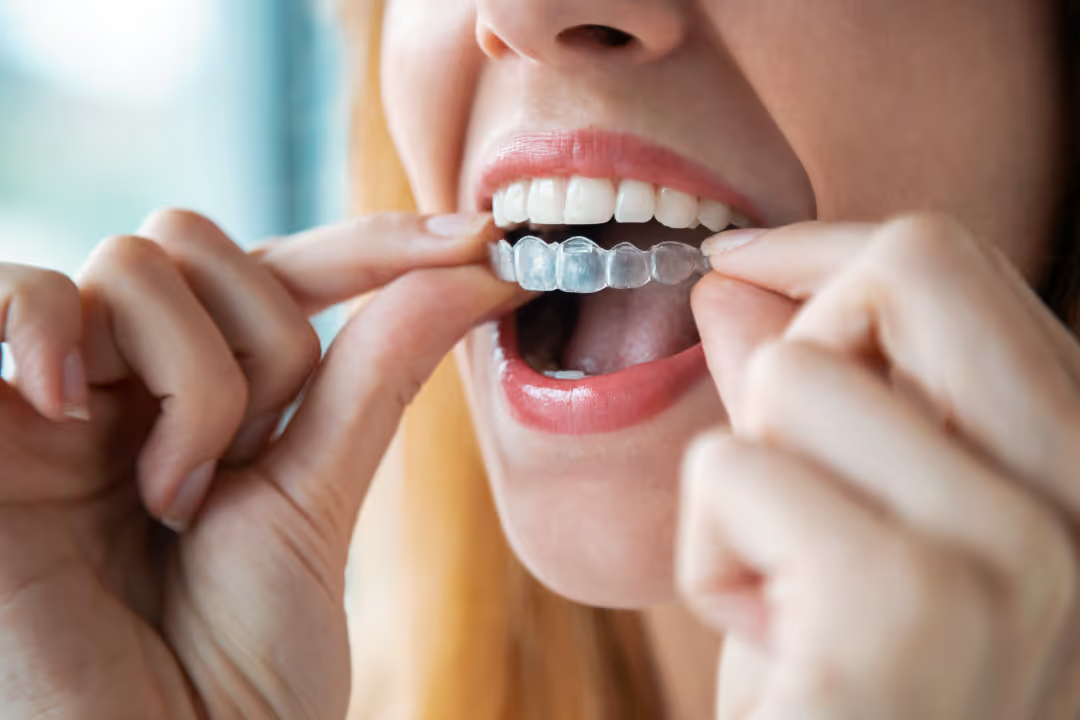
What Is IPR in Invisalign Treatment?
If you’ve been told you need Invisalign, you may also hear the term IPR, or interproximal reduction. This is a common technique used to create small amounts of space between teeth—without removing any teeth.
IPR involves gently reshaping the sides of teeth to:
- Reduce crowding
- Improve alignment
- Avoid more invasive procedures
Watch this real case example from Dr. Shapiro here:
https://www.tiktok.com/@drshap/video/7624277862161337614
Why Not Just Expand the Teeth?
In many Invisalign cases, treatment plans may suggest expanding the dental arch to create space. However, expansion is not always the safest or best option.
In this case, expansion was avoided due to gum recession.
Expanding teeth outward in patients with recession can:
- Worsen gum loss
- Expose tooth roots
- Lead to long-term instability
That’s why alternative strategies like IPR are sometimes preferred. Learn more about customized treatment options on the Invisalign page (https://www.wallstreetortho.com/services/orthodontics/invisalign).
What Does “No Round Tripping” Mean?
“Round tripping” refers to moving teeth in one direction and then reversing that movement later in treatment.
This is generally avoided because it:
- Increases treatment time
- Adds unnecessary stress to teeth
- Reduces efficiency
In this case, the treatment plan avoided round tripping by:
- Using precise IPR to create space
- Moving teeth directly into their final positions
This results in a more efficient and biologically sound approach.
When Is IPR the Best Option?
IPR is often recommended when:
- Crowding is mild to moderate
- Expansion is not ideal due to gum or bone limitations
- Tooth extractions are not necessary
It’s a conservative technique that can significantly improve alignment while preserving overall tooth structure.
The Role of Gum Health in Orthodontics
One of the most important takeaways from this case is the impact of gum health on treatment decisions.
Patients with gum recession require special consideration because:
- The supporting bone may be thinner
- Teeth are more vulnerable to movement outside the bone
- Aggressive expansion can cause damage
At Wall Street Orthodontics (https://www.wallstreetortho.com/about), treatment planning always considers both tooth alignment and long-term periodontal health.
Technology That Enables Precise Tooth Movement
Modern orthodontics allows for highly controlled, customized treatment planning using advanced tools like:
- Digital Impressions (iTero) (https://www.wallstreetortho.com/services/other/digital-impressions-itero) for accurate 3D models
- 3D CT Scanning (https://www.wallstreetortho.com/services/other/3d-ct-scanning) for evaluating bone support
These technologies help determine whether IPR, expansion, or other methods are most appropriate.
Invisalign vs Other Crowding Solutions
Depending on your case, there are several ways to address crowding:
- Invisalign for gradual, controlled alignment
- Braces (https://www.wallstreetortho.com/services/orthodontics/braces) for more complex tooth movements
- Hybrid Treatment (https://www.wallstreetortho.com/services/orthodontics/hybrid-treatment) combining techniques
Each option is selected based on your anatomy, goals, and oral health.
Why Personalized Treatment Planning Matters
No two patients are the same. The decision to use IPR instead of expansion depends on:
- Severity of crowding
- Gum and bone health
- Tooth position
- Long-term stability goals
Working with an experienced orthodontist like Dr. Lucas W. Shapiro, DDS (https://www.wallstreetortho.com/about) ensures your treatment is both effective and safe.
FAQs
Does IPR damage your teeth?
No. When performed correctly, IPR removes a very small amount of enamel and is considered safe and controlled.
Is IPR better than tooth extraction?
For mild to moderate crowding, IPR is often a more conservative alternative to extractions.
Can Invisalign fix crowding without expansion?
Yes. Techniques like IPR allow orthodontists to create space without widening the dental arch.
What is round tripping in orthodontics?
Round tripping is when teeth are moved in one direction and then moved back later, which can make treatment less efficient.
Is Invisalign safe if I have gum recession?
Yes, but treatment must be carefully planned to avoid worsening the condition.
Lorem ipsum dolor sit amet, consectetur adipiscing elit. Suspendisse varius enim in eros elementum tristique. Duis cursus, mi quis viverra ornare, eros dolor interdum nulla, ut commodo diam libero vitae erat. Aenean faucibus nibh et justo cursus id rutrum lorem imperdiet. Nunc ut sem vitae risus tristique posuere.
Ready to Straighten Your Smile Safely and Efficiently?
If you’ve been told you need Invisalign but are concerned about crowding or gum health, Wall Street Orthodontics offers personalized solutions designed for long-term success.
Schedule your consultation today:
- Phone: (212) 871-9835
- Address: 111 Broadway #1707, New York, NY 10006
- Website: https://www.wallstreetortho.com/
