
Optimized Rotation vs. Retention Attachments: Why Invisalign Treatment Planning Matters
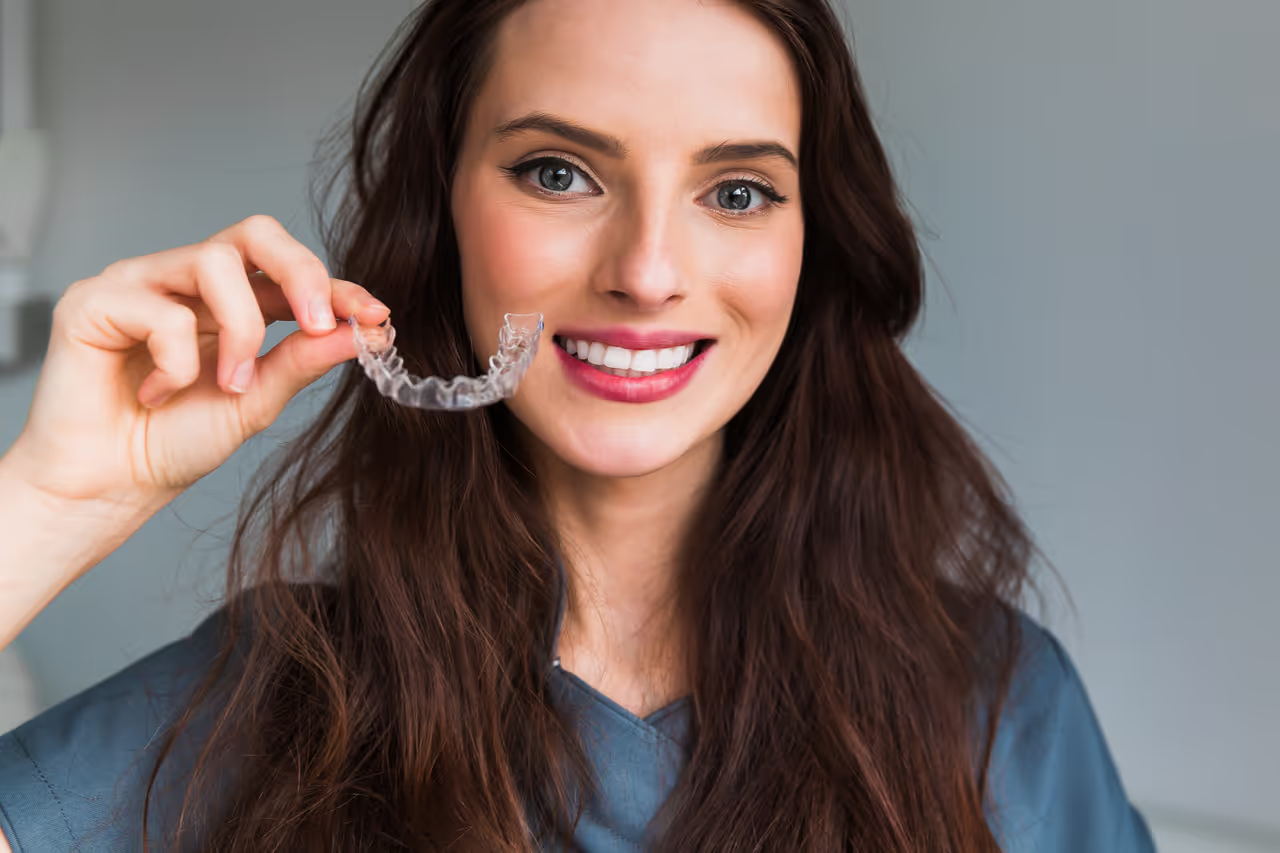
Understanding Invisalign Attachments
Invisalign treatment is often associated with clear aligners, but many patients are surprised to learn that small tooth-colored attachments play a critical role in achieving successful results. At Wall Street Orthodontics, treatment planning goes beyond simply following software recommendations. Every tooth movement must be evaluated to determine which forces are most important for creating an efficient and predictable outcome.
In this TikTok video, Dr. Lucas W. Shapiro explains why selecting the correct attachment is essential and why Invisalign's automated treatment planning may not always prioritize the ideal movement for a specific case:
https://www.tiktok.com/@drshap/video/7645812787624561933
What Are Invisalign Attachments?
Attachments are small composite shapes bonded to specific teeth that help aligners grip and move teeth more effectively. Different attachment designs are engineered to accomplish different types of tooth movement.
Common attachment objectives include:
- Tooth rotation
- Root control
- Extrusion and intrusion
- Retention and aligner tracking
- Torque movements
Without properly selected attachments, aligners may struggle to deliver the precise force required for certain movements, especially when rotating rounded teeth such as canines and premolars. Invisalign relies heavily on attachments to improve treatment predictability and tracking.
Why Optimized Rotation May Be More Important Than Retention
One of the key points discussed in the TikTok video is that Invisalign's software may not always prioritize the movement that matters most clinically.
In some cases, the software may recommend a retention-focused attachment when the true treatment challenge is rotating a tooth into the proper position. When this happens, selecting an optimized rotation attachment can produce more efficient and predictable results.
Benefits of optimized rotation attachments may include:
- Improved control of difficult tooth movements
- Better aligner tracking
- Reduced need for refinements
- Shorter treatment timelines
- More accurate final results
This is where orthodontic expertise becomes essential. Digital treatment planning software is a valuable tool, but treatment outcomes still depend on clinical judgment and individualized decision-making. Patients seeking Invisalign benefit from a customized approach that prioritizes the movements most critical to their case.
Why Treatment Priorities Matter More Than Software Recommendations
Modern orthodontic software generates treatment simulations based on algorithms and programmed movement sequences. However, every patient presents unique challenges that may require modifications to the default plan.
An orthodontist may need to:
- Change attachment designs
- Reorder movement priorities
- Slow down or accelerate specific movements
- Add overcorrection where necessary
- Eliminate unnecessary mechanics that prolong treatment
The goal is not simply to follow the software. The goal is to create a treatment plan that moves teeth efficiently while maintaining long-term stability and patient comfort.
Managing Class II Corrections in Adult Patients
Another important consideration discussed in the video is Class II correction in adult patients.
Class II malocclusions typically involve the upper teeth being positioned too far forward relative to the lower teeth. While elastics are commonly used to help correct this relationship, they are not always the best option for every patient.
In adults, aggressive Class II correction can sometimes:
- Increase treatment time
- Create unwanted side effects
- Place additional stress on the jaw joints
- Complicate treatment for patients with existing TMJ concerns
For many adults, treatment goals should focus on creating a healthy, functional bite rather than pursuing extensive corrections that may increase discomfort or prolong treatment unnecessarily.
Special Considerations for Patients with TMJ Disorders
Patients with temporomandibular joint dysfunction require especially careful orthodontic planning. The TMJ plays a critical role in jaw movement, chewing, and overall oral function. When orthodontic treatment introduces excessive forces or extends treatment timelines, symptoms may worsen in susceptible individuals.
For patients experiencing TMJ issues, orthodontists often prioritize:
- Efficient treatment mechanics
- Reduced strain on the jaw joints
- Minimizing flare-ups and discomfort
- Preventing jaw locking episodes
- Completing treatment as efficiently as possible
In these situations, avoiding unnecessary elastic wear or complex bite corrections may help improve patient comfort throughout treatment.
Patients experiencing jaw pain or clicking may benefit from an evaluation for TMJ Therapy as part of their overall orthodontic treatment plan. TMJ-focused care can help identify factors contributing to joint stress and improve long-term function.
Technology Supports Better Treatment Planning
Advanced orthodontic technology allows providers to evaluate treatment options with greater precision than ever before. At Wall Street Orthodontics, digital planning tools help create customized treatment strategies tailored to each patient's needs. The practice utilizes technologies such as Digital Impressions (iTero) and 3D CT Scanning to support accurate diagnosis and treatment planning.
However, technology is only one part of the equation. Successful orthodontic treatment still requires careful clinical evaluation and personalized adjustments throughout the process.
FAQs
What do Invisalign attachments do?
Attachments help aligners apply specialized forces to teeth for movements such as rotation, torque, extrusion, and retention. They improve the predictability of Invisalign treatment.
Why would an orthodontist change Invisalign's recommended attachments?
The software may not always prioritize the most important movement for a particular case. Orthodontists can modify attachment designs to improve treatment efficiency and outcomes.
What is an optimized rotation attachment?
An optimized rotation attachment is specifically designed to help rotate teeth more effectively when standard aligner forces alone may not be sufficient.
Can Invisalign treatment affect TMJ symptoms?
In some cases, orthodontic treatment can influence TMJ symptoms. Patients with existing jaw pain should receive individualized treatment planning that considers joint health and bite function.
Why might Class II elastics be avoided in some adults?
For certain adult patients, especially those with TMJ concerns, Class II elastics may increase discomfort, prolong treatment, or place additional stress on the jaw joints.
Lorem ipsum dolor sit amet, consectetur adipiscing elit. Suspendisse varius enim in eros elementum tristique. Duis cursus, mi quis viverra ornare, eros dolor interdum nulla, ut commodo diam libero vitae erat. Aenean faucibus nibh et justo cursus id rutrum lorem imperdiet. Nunc ut sem vitae risus tristique posuere.
Schedule Your Invisalign Consultation
Choosing the right attachments, treatment mechanics, and movement priorities can make a significant difference in the success of Invisalign treatment. If you're considering clear aligners or have concerns about TMJ symptoms during orthodontic care, Contact Wall Street Orthodontics to schedule a consultation and learn about your personalized treatment options.
