

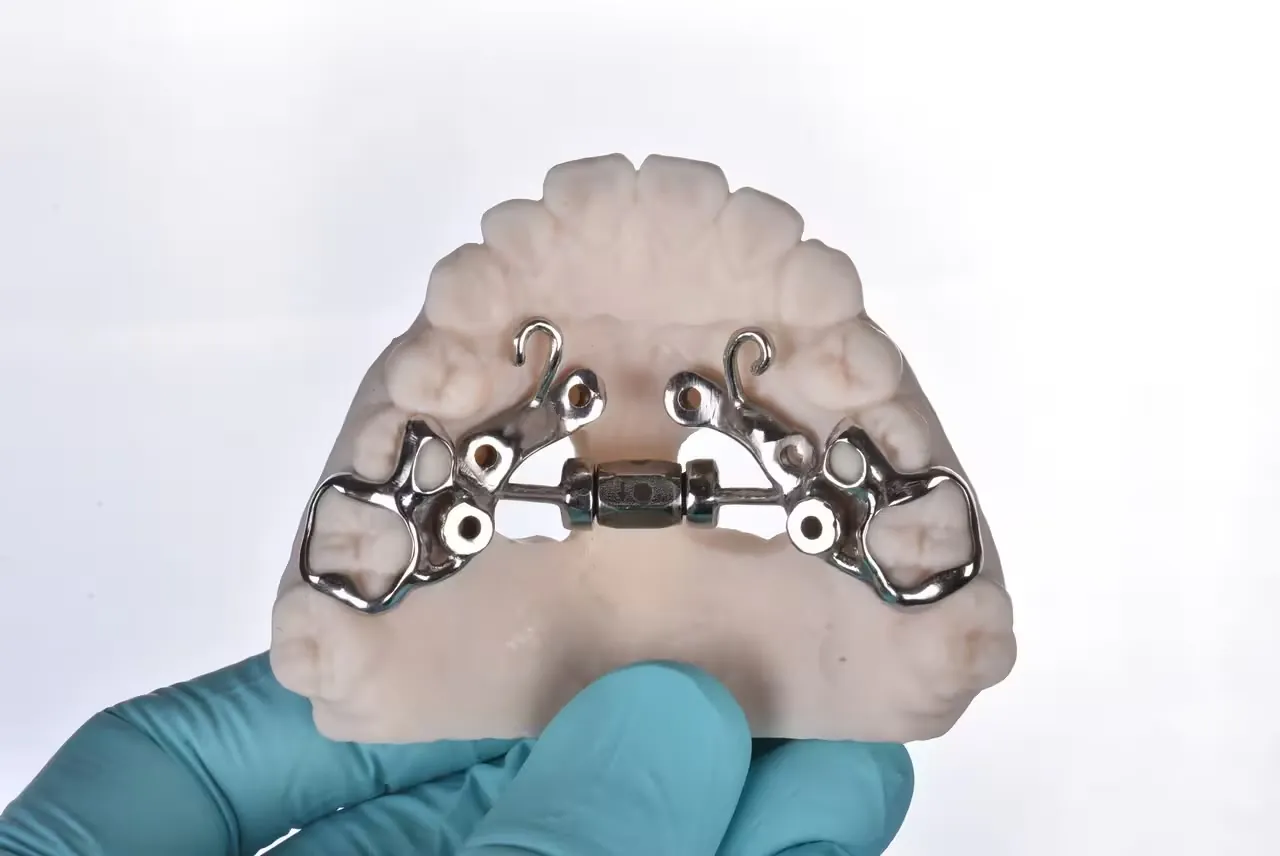
MARPE New York City: Adult and Pediatric Palate Expansion
If you've been told you're "too old" for a palate expander, Dr. Lucas Shapiro at Wall Street Orthodontics wants you to know that adult expansion is a normal part of his practice, not an exception. As an orthodontist offering MARPE in New York City, along with FME and MSE options, Dr. Shapiro treats both children and adults who need more room in a narrow jaw. New patients are always welcome, and every treatment plan starts with a clear conversation about your options, so there are no surprises about what comes next. Dr. Shapiro also speaks Spanish fluently and has working knowledge of French, Chinese, and Portuguese, so care in your own language is often possible right at the doctor level. Whether you're a parent researching options for your child or an adult who was turned away elsewhere, this page walks through what expansion treatment looks like for your case.
Why Patients Come to Wall Street Orthodontics for Jaw Expansion
Many orthodontists see a narrow jaw in an adult and immediately point toward surgery. Dr. Shapiro takes a different approach. He evaluates each patient's bone structure, airway, and bite using 3D CBCT imaging before deciding on a path, and in many adult cases, a non-surgical expander can achieve the skeletal change that used to require a hospital stay. This whole-health view matters because a narrow palate can affect more than how teeth line up. It can also crowd the nasal airway and make breathing harder, which is why expansion often becomes part of a larger conversation about sleep and airway health. Patients come from across the Financial District and Lower Manhattan for this level of diagnostic precision, and scheduling is designed to fit your workday. For patients who speak Spanish, French, or Chinese, care at the doctor level removes a real barrier that many other specialty practices can't address.
What MARPE Can Do That Traditional Expanders Cannot
Traditional rapid palatal expanders rely on the bone plates in the roof of the mouth still being loosely connected, which is normal in growing children but usually not the case in adults. MARPE, or Miniscrew-Assisted Rapid Palatal Expansion, uses small titanium anchors called mini-implants to grip the bone directly instead of relying only on the teeth. This lets the appliance apply expansion force to the palate itself, which is why MARPE can work for many adult patients whose growth plates have already fused. It's a meaningful difference for anyone who was told years ago that expansion "wasn't an option anymore."
Expansion for Children vs. Adults: What Changes and What Stays the Same
In children, the bone in the roof of the mouth hasn't fully fused, so a standard expander can widen the palate through the midline suture with steady, gentle pressure. In adults, that suture is usually more rigid, which is why a palate expander for adults in NYC often means MARPE, MSE, or FME instead of a conventional RPE. What stays the same across ages is the goal: creating room for teeth, improving the bite, and supporting a healthier airway. The diagnostic process, activation schedule, and monitoring visits follow a similar rhythm for children and adults, even though the appliance and force delivery look different.
MARPE and Palate Expansion Options in NYC
Dr. Shapiro offers several expansion appliances as part of our expansion and advanced treatment options, and which one fits your case depends on your age, your bite, and what the CBCT scan shows.
MARPE, or Miniscrew-Assisted Rapid Palatal Expansion, uses mini-implants anchored into the palate bone, letting adults achieve real skeletal expansion without surgery in many cases. FME, the Facegenics Midface Expander, is a bone-anchored option built for the wider midface structure, often considered when bite and airway concerns extend beyond the palate alone. MSE, or Maxillary Skeletal Expander, is another bone-anchored expander that some adult and adolescent patients use to achieve skeletal widening. Each of these appliances sits in the roof of the mouth and is activated gradually, either at home with a small key or during office visits, depending on the design.
How We Choose the Right Expander for Your Case
Every expansion case starts with 3D CBCT imaging, which shows Dr. Shapiro the shape and density of your palate bone, the position of your tooth roots, and how much room is available for mini-implants. This diagnostic step, paired with a full conversation about your goals and any airway concerns, is how he decides between MARPE, FME, MSE, or a conventional expander for growing children. You'll always know why a particular appliance was chosen for you, not just which one.
What to Expect During Expansion Treatment
Most expansion treatment starts with a straightforward appointment to place the appliance, which sits along the roof of the mouth and becomes barely noticeable once you get used to it. For the first week or two, you or your child will turn a small key once or twice a day to gradually widen the palate. This activation phase is usually the most active part of treatment, and some pressure or mild soreness is normal, though most patients describe it as manageable rather than painful. After active widening is complete, the appliance stays in place for several months as a retainer, letting new bone fill in the wider space so the change holds. Dr. Shapiro checks progress at regular visits and explains what he's seeing at each step, so you always know where you stand before moving on to next steps like braces or Invisalign to finish aligning the teeth.
What Happens If Skeletal Narrowing Goes Untreated
A narrow palate rarely stays the same over time. Left untreated, it tends to get harder to manage, not easier. Crowding can worsen as teeth compete for less space, the bite may shift further out of alignment, and a narrowed nasal passage can make nose breathing harder, which sometimes shows up as mouth breathing or restless sleep. The longer skeletal narrowing goes unaddressed, the more likely a case is to eventually need tooth extractions or a surgical approach, simply because the non-surgical window can narrow along with the palate itself. This is exactly why Dr. Shapiro raises expansion early, whether he's evaluating a young child through early intervention or an adult who has lived with a narrow bite for years.
When Is Expansion No Longer an Option Without Surgery?
There isn't a single age where surgery automatically becomes necessary. The decision usually comes down to how fused the palate suture is and how much expansion the bite needs. Some adults are excellent candidates for MARPE well into later decades, while others with more complex skeletal discrepancies may need surgical orthodontics, or SARPE, done in partnership with an oral surgeon. Dr. Shapiro's CBCT-based evaluation is what draws that line for your specific case, rather than guessing based on age alone.
MARPE vs. SARPE: Choosing the Right Expansion Approach
For patients whose cases fall closer to that line, comparing MARPE and SARPE side by side helps clarify what each path involves before you and Dr. Shapiro decide together.
| Feature | MARPE | SARPE |
|---|---|---|
| Surgical procedure required | No | Yes |
| Performed in-office | Yes | Coordinated with oral surgeon |
In general, MARPE is the first option Dr. Shapiro explores for adult patients, reserving SARPE for cases where the skeletal discrepancy is too significant for a bone-anchored expander alone.
Frequently Asked Questions About Palate Expansion in NYC
Am I too old for a palate expander?
There isn't an upper age limit that rules out expansion on its own. Dr. Shapiro evaluates your palate bone using 3D CBCT imaging to see whether MARPE or another bone-anchored expander is likely to work for your case. Many adults who were told years ago that they were too old are still good candidates.
How long does MARPE treatment take?
The active widening phase with MARPE typically takes a few weeks, while the appliance usually stays in place for several months afterward to let new bone fill in. Total treatment time varies by case and often continues into braces or Invisalign to finish aligning the teeth. Dr. Shapiro will map out a specific timeline for you during your consultation.
Is palate expansion painful?
Most patients feel pressure or mild soreness during the activation phase, especially right after turning the key, but it isn't usually described as painful. Over-the-counter pain relief is often enough if needed. Discomfort tends to ease once the active widening phase is complete.
Does insurance cover palate expanders for adults?
Coverage for adult palate expanders varies quite a bit from plan to plan.
Can expansion help with breathing or sleep issues?
A narrow palate can crowd the nasal airway, and widening it may improve nasal breathing for some patients. Expansion is often part of a broader airway-focused conversation about sleep and breathing, though it isn't a standalone treatment for sleep apnea. Dr. Shapiro can discuss whether airway concerns are relevant to your case during your evaluation.

Find Out Whether MARPE Fits Your Case
Dr. Shapiro can walk you through your CBCT scan and let you know honestly whether MARPE, FME, MSE, or another path makes sense for you or your child.