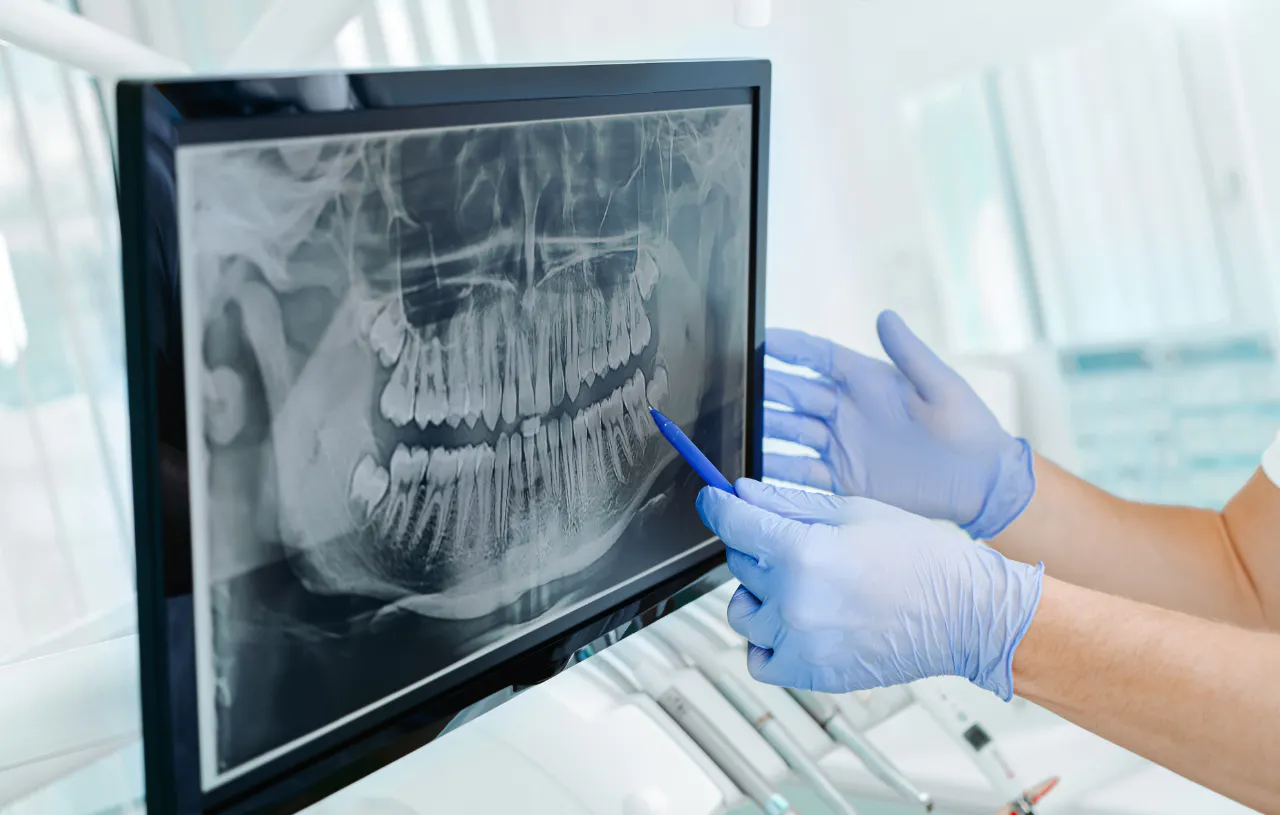
The Plan That Almost Went Wrong: Why a Cephalometric X-Ray Caught What the Software Missed
Dr. Lucas W. Shapiro, DDS·
Published
A Plan That Looked Fine on the Surface
In a recent TikTok, Dr. Lucas Shapiro of Wall Street Orthodontics reviewed what he calls a perfect example of a treatment plan that could have gone very badly, if it hadn’t been carefully reviewed before treatment began.
On the surface, the digital simulation may have looked like a reasonable plan. But underneath it were two significant red flags: 6 mm of anterior retraction and 0.4 mm of IPR planned across the front eight teeth. Individually, those numbers might not mean much to a patient. Together, and in the context of this patient’s actual facial and dental anatomy, they pointed toward a real problem.
What Do These Numbers Actually Mean?
Anterior retraction refers to moving the front teeth (the incisors) backward, toward the tongue, typically to correct protrusion or create room elsewhere in the arch. Six millimeters is a substantial amount of retraction for front teeth, enough to meaningfully change how the smile and profile look.
IPR (interproximal reduction), which we’ve discussed in more detail in our post on Invisalign IPR explained, involves gently reshaping the sides of teeth to create small amounts of space. Planning 0.4 mm of IPR across all eight front teeth adds up to a meaningful amount of space being manufactured purely to support that retraction.
On their own, retraction and IPR are both legitimate orthodontic tools. The problem in this case wasn’t that these techniques were used, it’s that the plan called for using them on a patient who didn’t actually need that kind of movement.
What the Ceph Revealed
A cephalometric X-ray, often just called a “ceph,” is a specialized side-profile radiograph used to evaluate the position of the teeth relative to key skeletal landmarks in the face and jaw. It’s one of the most important tools for determining whether a patient’s front teeth are already sitting where they should be, not just how they look in a photo or digital scan.
When Dr. Shapiro reviewed this patient’s ceph, the incisors were already at their ideal inclination, meaning they were already correctly angled and positioned relative to the underlying jaw and facial structure. Retracting them a further 6 mm, as the default plan called for, would have moved genuinely well-positioned teeth out of their ideal spot.
Why This Would Have Been a Real Problem
Retracting already well-positioned incisors isn’t a neutral adjustment. It can lead to a range of unwanted outcomes, including:
✓A flatter, less supported facial profile, since the front teeth help support the lips
✓A less natural, potentially “aged” appearance to the smile and lower face
✓Changes to bite function that weren’t actually needed to begin with
✓Unnecessary loss of enamel from the IPR performed to make that retraction possible
This is the same underlying theme we’ve discussed in cases involving extraction and facial balance and bimaxillary protrusion: moving front teeth significantly, in either direction, without a clear diagnostic reason can compromise facial balance rather than improve it.
The Bigger Lesson: The Software Isn’t the One Diagnosing You
Dr. Shapiro’s closing point in this video is the one worth remembering most: Invisalign, Spark, Angel Aligner, or any other clear aligner company doesn’t dictate treatment. These platforms are tools an orthodontist uses, not decision-makers on their own.
A default software-generated plan reflects general assumptions about how to solve a given alignment problem. It doesn’t know that this particular patient’s incisors were already exactly where they needed to be. Only a proper diagnostic workup, including a cephalometric analysis, can reveal that kind of detail. This is consistent with what we’ve discussed in our posts on why aligner presets can’t replace real treatment planning and optimized rotation vs. retention attachments: the platform proposes a plan, but it’s the orthodontist’s diagnosis that determines whether that plan is actually right for the patient in front of them.
Why Diagnostic Imaging Should Be Part of Every Plan Review
This case is a strong argument for why treatment planning should never stop at the digital simulation alone. Reviewing a cephalometric X-ray, alongside tools like 3D CT Scanning, gives an orthodontist the full picture needed to catch red flags like unnecessary retraction or IPR before they ever become part of a patient’s actual treatment.
FAQs
What is a cephalometric X-ray (ceph)?
A ceph is a specialized side-profile X-ray used to evaluate the position of the teeth relative to the underlying jaw and facial skeleton, helping determine whether teeth are already in their ideal position.
Why would 6 mm of anterior retraction be a problem?
If the front teeth are already correctly positioned, retracting them further can flatten facial support, negatively affect the smile’s appearance, and create bite changes that weren’t actually necessary.
Why does IPR matter in this context?
Planning IPR to support unnecessary tooth movement means removing enamel without a genuine diagnostic reason, which isn’t in the patient’s best interest.
Does the clear aligner brand used affect how safe or accurate a treatment plan is?
Not directly. Different aligner companies are tools used to generate a proposed digital plan, but the orthodontist’s review and diagnosis determine whether that plan is actually appropriate for the patient.
How can red flags like this be caught before treatment starts?
A thorough diagnostic workup, including a cephalometric X-ray and clinical evaluation, allows an orthodontist to catch unnecessary or potentially harmful movements in a default plan before treatment begins.
Ready for a Treatment Plan Backed by Real Diagnostics?
Every treatment plan at Wall Street Orthodontics is reviewed against real diagnostic imaging, not just accepted as generated by the software, so that every planned movement actually serves your specific diagnosis.